Tuesday, September 10, 2013

In October of 2001, my sister started getting very sick She had stomach spasms and she was having a hard time getting around. Walking was a major chore. It took everything she had just to get out of bed; she was in so much pain.

By March 2002, she had undergone several tissue and muscle biopsies and was on 24 various prescription medications. The doctors could not determine what was wrong with her. She was in so much pain, and so sick she just knew she was dying.

She put her house, bank accounts, life insurance, etc., in her oldest daughter’s name, and made sure that her younger children were to be taken care of.

She also wanted her last hooray, so she planned a trip to Florida (basically in a wheelchair) for March 22nd.

On March 19, I called her to ask how her most recent tests went, and she said they didn’t find anything on the test, but they believe she had MS.

I recalled an article a friend of mine e-mailed to me and I asked my sister if she drank diet soda? She told me that she did. As a matter of fact, she was getting ready to crack one open that moment.


I told her not to open it, and to stop drinking the diet soda! I e-mailed her an article my friend, a lawyer, had sent. My sister called me within 32 hours after our phone conversation and told me she had stopped drinking the diet soda AND she could walk! The muscle spasms went away. She said she didn’t feel 100% but, she sure felt a lot better.

She told me she was going to her doctor with this article and would call me when she got home.

Well, she called me, and said her doctor was amazed! He is going to call all of his MS patients to find out if they consumed artificial sweeteners of any kind. In a nutshell, she was being poisoned by the Aspartame in the diet soda and literally dying a slow and miserable death.

Continue reading:  http://rhondagessner.wordpress.com/2013/09/02/a-killer-in-your-fridge-sweet-poison-a-must-read/

Saturday, March 31, 2012

High-Fructose Corn Syrup Prompts Considerably More Weight Gain

A Princeton University research team has demonstrated that all sweeteners are not equal when it comes to weight gain: Rats with access to high-fructose corn syrup gained significantly more weight than those with access to table sugar, even when their overall caloric intake was the same.


http://www.sciencedaily.com/releases/2010/03/100322121115.htm?utm_source=feedburner&utm_medium=feed&utm_campaign=Feed%3A+sciencedaily+%28ScienceDaily%3A+Latest+Science+News%29

Friday, March 30, 2012

Eat cake or cookies with breakfast to lose weight, study suggests

"Typically carbohydrate is 100 percent converted to sugar within an hour in the body, causing your blood glucose to spike and then crash quickly, leading to increased hunger," Murray told HealthPop in an email. "The addition of protein-enriched foods slows this process down, reduces the feeling of hunger, which in turn can help individuals from snacking in response to sugar crashes."
Smith says, "I definitely wouldn't recommend to my patients to start eating dessert to breakfast."

Source

Sorry to disappoint those who thought cake or cookies for breakfast is a good idea. ;)

Tuesday, August 2, 2011

Low-carb, high-fat diets add no arterial health risks to obese

Good news, I would say:
Low-carb dieters showed no harmful vascular changes but also on average dropped 10 pounds in 45 days, compared to an equal number of study participants randomly assigned to a low-fat diet. The low-fat group, whose diets consisted of no more than 30 percent from fat and 55 percent from carbs, took on average 70 days, nearly a month longer, to lose the same amount of weight. [...]
However, Stewart does contend that an overemphasis on low-fat diets has likely contributed to the obesity epidemic in the United States by encouraging an overconsumption of foods high in carbohydrates. He says that high-carb foods are, in general, less filling and that people tend to get carried away with how much low-fat food they can eat. More than half of American adults are estimated to be overweight, with a body mass index of 26 or higher; a third are considered to be obese, with a BMI of 30 or higher. 
Full article here.

Tuesday, June 14, 2011

3 simple weight loss tips

What is the main cause of failed dieting?

I'd say it is hunger. And cravings. Also our body adapts to diets and weight-loss tends to plateau.

3 simple tips I used when the above happened:

  1. Eat a good breakfast. A heavy whipping cream omelette and bacon has worked best for me. Keeps me full late into the afternoon.

  2. Follow the 80/20 rule. Eat "right" 80% of the time and indulge 20% of the time. I had some ice-cream or other treat on the weekend. Keeps you sane and it's easier to stay motivated. Nobody likes to feel like their "life is over" and they will never be able to eat what they like the most again. Just don't go overboard, all in moderation.

  3. When and if you plateau in your weight-loss, the body needs a wake-up call. When I first started with Low Carb High Fat, I plateaued after about 2.5 months. I did some research and decided to do the opposite of what I was doing. So for 3-4 days, I ate nothing but High Carb food, pasta, potatoes, sugar and so on. Then back to Low Carb High Fat. It worked. I started losing weight again.

Friday, May 6, 2011

List of fruit from low to high in sugar

Pretty handy list for those who crave fruit, but still want to keep down the carbs.


Fruits Lowest in Sugar
Small Amounts of Lemon or Lime
Rhubarb
Raspberries (more about berries on low carb diets)
Blackberries
Cranberries


http://lowcarbdiets.about.com/od/whattoeat/a/whatfruit.htm

Thursday, April 28, 2011

Diet may ’reverse kidney failure’ in diabetics


Researchers at the Mount Sinai School of Medicine in New York found a "ketogenic diet" could reverse the damage caused to tubes in the kidneys by too much sugar in the blood. 
For their study, the researchers used laboratory mice with both type 1 and type 2 diabetes.  Once kidney damage had developed, half the mice were put onto the ketogenic diet, which is 87 percent fat and mimics the effect of starvation. 
After eight weeks, the researchers noted that kidney damage was reversed in those rodents which were on the highly controlled diet, the leading news channel reported.


http://www.onlinenews.com.pk/details.php?id=178316

Wednesday, March 9, 2011

Florida outlaws journalism

http://www.flsenate.gov/Session/Bill/2011/1246

- Will it be a favorable article?
- Um....
A person who enters onto a farm or other property where legitimate agriculture operations are being conducted without the written consent of the owner, or an authorized representative of the owner, commits a felony of the first degree, punishable as provided in s. 775.082, s. 775.083, or s. 775.084, Florida Statutes.
Anyone seeing Monsanto headquarters moving to the corporation friendly state of Florida?

Sunday, December 19, 2010

Cleaning up your carb act

LA Times article.Awareness is step 1 in any change.


Joanne Slavin, professor of nutrition at the University of Minnesota, member of the 2010 Dietary Guidelines Advisory Committee:

"Americans have to eat fewer calories. But I see no value in making a hit list for carbs. There are many healthy eating patterns, and potatoes, pasta, white bread and rice surely fit into many of these."
Slavin mentions rice which is empty calories with almost no nutritional value. Rice is true junk food as far as carb and nutrition goes.For those inclined to read nutrient tables here's detailed info on rice.

And white bread & pasta. How white bread and pasta can fit into any diet is beyond me.Ask yourself what it is you like about pasta. I doubt it is the actual pasta, but the sauce, vegetables or proteins that go with it. The pasta is just there to make you full. When did you last eat pasta on it's own?

I eat pasta, but without the pasta. Normally I replace the pasta with either cooked or pan fried vegetables. Cauliflower ground down to the size of rice is delicious. And it takes on an interesting flavor when fried in a pan.

In a world of increasing obesity I find it careless for a professor in nutrition, who is also a member of the Dietary Guidelines Advisory Committee, to say rice, pasta and white bread aren't that bad. But that's just me...

You don't have to be a rocket scientist to recognize the power of Big Food lobbyism and their wallet.


Entire article here:
http://www.latimes.com/health/la-he-carbs-tips-20101220,0,4380325.story

Saturday, December 18, 2010

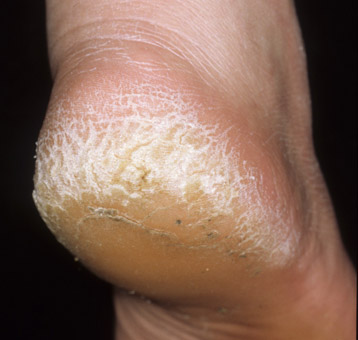
Cracked heels

I just saw this commercial on TV. About cracked heels and some "wonder oil" that the actors say fixed their cracked heels in a jiffy.


Not my heels, but pretty close to what they looked like. Let me tell you, it HURT. No matter how much oils, lotions I used, no matter how much I scrubbed my heels, they just kept cracking. No more. Same thing with cracked elbows. And fingers. And.. and... The list goes on. In general my skin has become very healthy compared to when I ate tons of carbs.

The more research I read about how carbohydrates changed mankind as far as what diseases we suffered from, the more convinced I get carbs make us sick. Not just fat, but sick as well. There are numerous studies showing indigenous people did not suffer from western diseases until they adapted western diets.

Wednesday, December 15, 2010

Why low carb diets must be high fat, not high protein

Great article by Barry Groves, PhD.

We now know that we should eat a diet that is low in carbohydrates. But a plethora of books published in the last decade have been low-carb, high-protein, or low-carb, high-fat, or low-carb, high-'good'-fats, or all sorts of other mixtures. In other words, the real confusion lies in what we should replace the carbohydrates with: for example, should it be protein or fats? And if fats, what sort of fats? This article, I hope, will answer the question and put any doubts out of your mind. In a nutshell, carbs should be replaced with fats, and those fats should be mainly from animal sources. 
http://www.second-opinions.co.uk/fat-not-protein.html

Monday, October 4, 2010

Saturated fat dangerous?

Maybe not.

''Carbohydrate intake has been intimately linked to metabolic syndrome, which is a combination of risk factors that can increase CVD risk,'' said Jeff Volek, PhD, RD, Department of Kinesiology, University of Connecticut. His research showed that very low carbohydrate diets can favorably impact a broad spectrum of metabolic syndrome and cardiovascular risk factors, even in the presence of high saturated fat intake and in the absence of weight loss.
A recent meta-analysis of epidemiological and intervention studies of milk fat conducted by Peter Elwood, DSc, MD, FRCP, FFPHM, DUniv, Hon DSc, Honorary Professor at the School of Medicine, Cardiff University, found that milk and dairy consumption actually was associated with a decrease in CVD risk."

http://www.eurekalert.org/pub_releases/2010-10/gg-tsf100110.php

Thursday, April 1, 2010

Consumer choice is a mighty force

The consumer interest in Non-GMO labeled foods is skyrocketing. In 2009, this micro market segment was worth $60.2 Million and grew at 67% over 2008, making it the #1 healthy eating trend in store brands for 2009. 
[...] 
This happened in the recent past with RBGH or RBST, the bovine growth hormone developed, not suprisingly, by Monsanto to increase the milk output from cows. It created many other problems, such as increased infections in the milk and disease in the cows. The FDA stated RBGH did not alter the milk, and sued several dairies that labeled their milk RBGH free.
Enough consumers found out the truth and started requesting RBGH free milk. Not long afterwards, the major players saw the movement in the market and made the switch to RBGH free suppliers. Surprisingly, this didn’t take a majority of consumers, only 5-7% of Americans, as they represent several hundred millions of dollars to the major national brands. This is money they will not lose when they can make a switch in suppliers and keep their customers happy.
Full article

Wednesday, March 31, 2010

Pink bollworms beat Monsanto


Evolution beats Monsanto
Monsanto has revealed that a common insect pest has developed resistance to its flagship genetically modified (GM) product in India. The agricultural biotechnology leader says it "detected unusual survival" of pink bollworms that fed on cotton containing the Cry1Ac gene from the bacterium Bacillus thuringiensis, which codes for a protein that's toxic to many insect pests. In a statement to Science, Monsanto claims that the finding from western India "is the first case of field-relevant resistance to Cry1Ac products, anywhere in the world."http://www.sciencemag.org/cgi/content/full/327/5972/1439

Tuesday, March 30, 2010

Disgusting GMO trout

I don't even know what to say about this. I'll just let the photo speak for itself.
While the fish aren't going to win any beauty contests, the genetically engineered rainbow trout could hold some appeal at market, because they each provide 15 to 20 percent more flesh than standard tout, researchers say.

Monster Trout
The transgenic trout incorporate genes modeled on myostatin-inhibiting proteins found in powerfully built Belgian blue cattle, a beef breed noted for its "double muscled" appearance.
Belgian Blue

Article in National Geographic

Does biotech make you worried?

Sunday, March 28, 2010

Are the leaders of Japan complete idiots? So it seems.

I normally like to stay civil when I post, but this really pisses me off.
The latest two-week long meeting of the Convention on International Trade in Endangered Species (CITES) saw bureaucrats sweep aside expert advice on how to save the bluefin tuna.
The bluefin tuna is close to extinction.


Years of research by marine and fisheries experts have concluded that the bluefin tuna's days are numbered, and unless there is an immediate ban it will become extinct in the very near future.
Some experts fear its population in the Atlantic has already fallen below sustainable levels.
A bluefin tuna can go for as much as $175.000 for one fish in Japan. So it is a matter of status to be able to afford to eat the bluefin tuna.

A vote was taken at CITES to put a temporary ban on bluefin tuna to help it recover. Sounds reasonable, don't you think?
Leading opposition to the ban was Japan, where most of the world catch is consumed in sushi restaurants.
Japan argued that a ban would be unfair, but the science supporting reasoned analysis was pushed to one side by politics, amid claims that Japan was trading promises of donor aid to developing countries in exchange for votes.
Unfair in what way? Unfair to those who simply can not live without eating the bluefin? Unbelievable.
Japan prevailed and the bluefin tuna may be doomed.
Good job, Japan! How much tuna do you think you will eat when there is no tuna?

BBC News article on the subject: How bureaucrats decided not to save the bluefin tuna.

Saturday, March 27, 2010

The Butterfly Effect

Comic courtesy of Savage Chickens

Genetic mutation happens for a reason, evolution. What is the reason for companies changing DNA?

Do scientist really know the longterm effects, on an ecosystem, when altering a plants or an animals DNA?
The director of UK’s prestigious Rowett Research Institute has stated: “The perception that everything is totally straightforward and safe is utterly naive. I don’t think we fully understand the dimensions of what we’re getting into.”
And:
We have such a miserably poor understanding of how the organism develops from its DNA that I would be surprised if we don't get one rude shock after another."  -Professor Richard Lewontin, professor of genetics, Harvard University.

Not very comforting if you ask me. What do you think?

Friday, March 26, 2010

A novel idea

Here is a novel idea for all foodies out there. There is veganism, vegetarianism, fruiterianism, low carb, paleo, Atkins, Ornish, South Beach, Zone,  LEARN, Mediterranean and God knows what. Despite having different ideas on what to eat and how to eat it, we all have one thing in common:

We all care about what we put in our body.

We all want to eat fresh, natural, high quality food.

When a nation is attacked by a common foe, the people of that nation join ranks to survive. Survival of the whole becomes more important than the individual beliefs.

Food lovers, also known as humans, are under attack. You might not know it, but we are. The common foe is Genetically Modified Organisms (GMO).


The effects of GMO are devastating.

  1. Brazil are deforesting Earth's lungs; the rain forest, to plant GMO soy.
  2. Monsanto, the worlds biggest biotech company, owns around 90% of all the soybean seeds in the USA, their goal being monopoly. All of that seed is Roundup resistant, a toxic pesticide, which kills everything living when applied. Roundup is a Monsanto product.
  3. They also own the larger part of the US corn production.
  4. In India Monsanto's products and business methods have led to thousands of Indian farmers committing suicide.
  5. There are studies showing kidney and liver failure in rat populations fed Monsanto's GMO corn. In experiments animals are fed large quantities of the corn. So the effects are visible much faster than among humans. Does the Monsanto corn have the same effect on humans? We don't know. Yet the same governments put in office by the people, approve these products for human consumption. Despite not knowing the effects.
  6. Monsanto has offices in the following countries: Argentina, Australia, Austria, Bangladesh, Belgium, Brazil, Bulgaria, Canada, Chile, China, Colombia, Croatia, Czech , Denmark, Ecuador, France, Germany, Greece, Guatemala, Honduras, Hungary, India, Indonesia, Ireland, Italy, Japan, Jordan, Kenya, Korea, Malawi, Malaysia, Mexico, Netherlands, New Zealand,, Pakistan, Paraguay, Peru, Philippines, Poland, Portugal, Romania, Russian Federation, Singapore, Slovakia, South , Spain, Sri Lanka, Switzerland, Taiwan, Thailand, Turkey, Uganda, Ukraine, United , United , Venezuela, Vietnam and Zimbabwe. So far...
  7. BASF is the European equivalent of Monsanto. The recently had their GMO potato Amflora approved for production in the EC. The potato is not to be used for food production nor fodder, but it is a starting point for giants like Monsanto and BASF to gain acceptance for their products.
  8. BASF writes the following on their website: "Seed treatment is a business area with growth potential: Genetically modified crops are playing an increasingly important role worldwide."
  9. When a company like BASF or Monsanto develop a GMO they patent the product. If i.e. a Monsanto soybean spreads, intentionally or unintentionally, to a neighboring farmer, Monsanto can sue the farmer for patent infringement.
  10. Farmers buying Monsanto product are not allowed to save seed for next years production. They have to buy new seed. If they save seed they can be sued for breach of contract. In effect the farmers are made dependent on Monsanto's product.
  11. Monsanto's latest venture is to patent pigs.
  12. Their agenda? Control food, control everything.


Is this a common enemy, food lovers can join ranks against? You tell me.

Thursday, March 25, 2010

Proven: Vitamin D Prevents the Flu -- Throw Out Your Tamiflu


"
Well, technically we only "prove" things in math and logic, when we assume our premises. But the most recent study on vitamin D and the flu, published in the American Journal of Clinical Nutrition, gets as close to proving anything as we can get in nutritional and medical science."

The Daily Lipid: http://bit.ly/autPy3